Objectives
- Proposes a single-day protocol for DaT-SPECT, cardiac MIBG scintigraphy, and FDG-PET to facilitate biomarker assessments for Parkinsonian syndromes.
- Demonstrates the feasibility of the protocol by showing no relevant interference between tracers, maintaining image quality, and allowing quantitative analysis.
- Suggests that the protocol aligns with the SyNeurGe biological classification of Parkinson's disease.
Methodology
- Used standard protocols for MIBG scintigraphy and DaT-SPECT.
- Performed cardiac imaging 3.5 hours after simultaneous injection of [123I]ioflupane and [123I]MIBG, followed by brain imaging at 4 hours.

- Five patients also received FDG-PET brain scans after DaT and MIBG imaging.
- Analyzed DaT-SPECT scans using Hermes BRASS and GE DaTQuant.
- Obtained heart-to-mediastinum ratios (H/M-ratio) for MIBG scans.
- Analyzed FDG-PET scans using 3D stereotactic surface projections (3DSSP).
Results
- Single tracer imaging confirmed no relevant uptake of [123I]ioflupane in the heart (mean SUV: 0.91 ± 0.07, H/M-ratio: 0.92 ± 0.10) or [123I]MIBG in the brain (mean SUV: 0.15 ± 0.06).
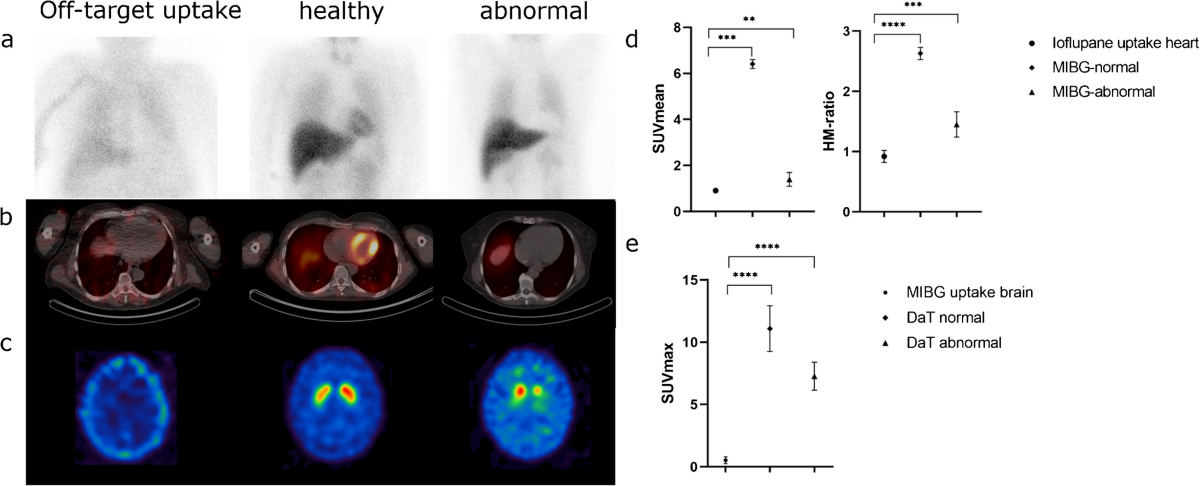
- In the dual tracer group (n=10), 6 patients showed reduced DaT-SPECT binding (mean putaminal z-score: -4.01 ± 1.39), and 7 patients had a pathological H/M-ratio (mean: 1.12 ± 0.08).

- No significant differences in SUV values were found between dual and single tracer acquisitions.
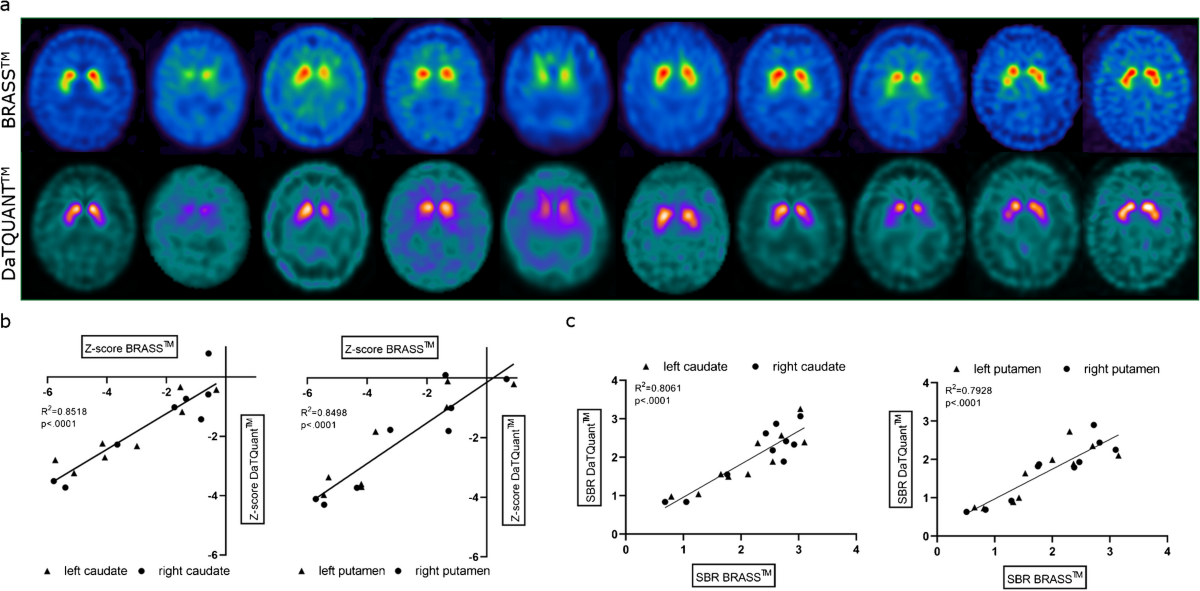
- Strong correlation between SBR and z-scores from Hermes BRASS and GE DaTQuant (R2 > 0.76, p < 0.0001 for all comparisons).
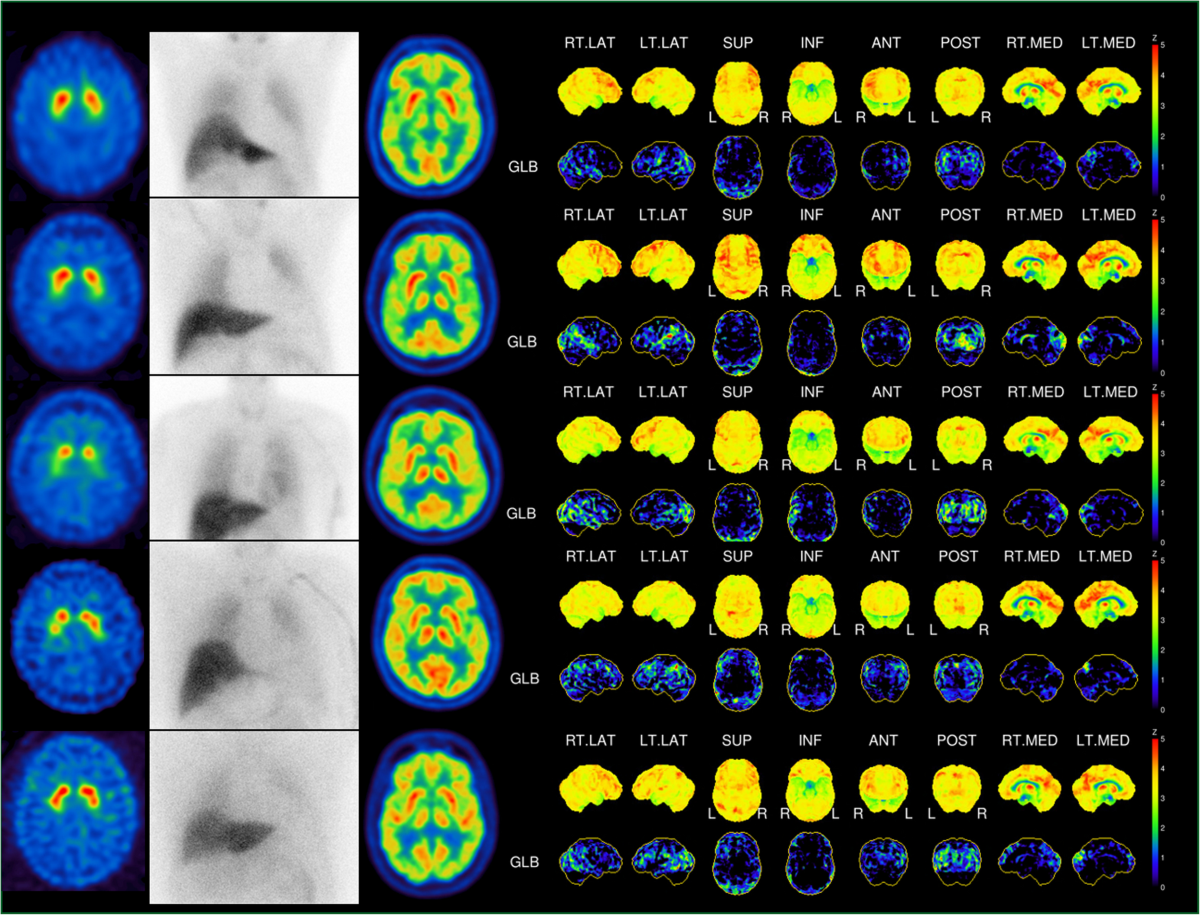
- FDG-PET scans in the triple tracer group (n=5) showed no interference.
Discussions
- The study is limited by a small sample size (n=10 for dual-tracer, n=5 for triple-tracer), which restricts the generalizability of the findings.
- The study uses a cohort of patients with clinically suspected α-synucleinopathies, introducing potential selection bias.
- While the study addresses potential interference, further investigation with larger sample sizes is needed to validate if adjustments to the H/M-ratio threshold are necessary.
- The study could benefit from exploring variations of the protocol, such as starting with Iofupane SPECT at 3 hours post-injection, followed by the MIBG scan.
Comments
Join the discussionNo comments yet. Be the first to comment.