Objectives
- Established reference values for 13N-ammonia PET myocardial perfusion imaging (MPI) in patients without flow-limiting coronary artery disease (CAD).
- Identified body mass index (BMI) as the most important predictor of resting myocardial blood flow (rMBF), stress MBF (sMBF), and myocardial flow reserve (MFR).
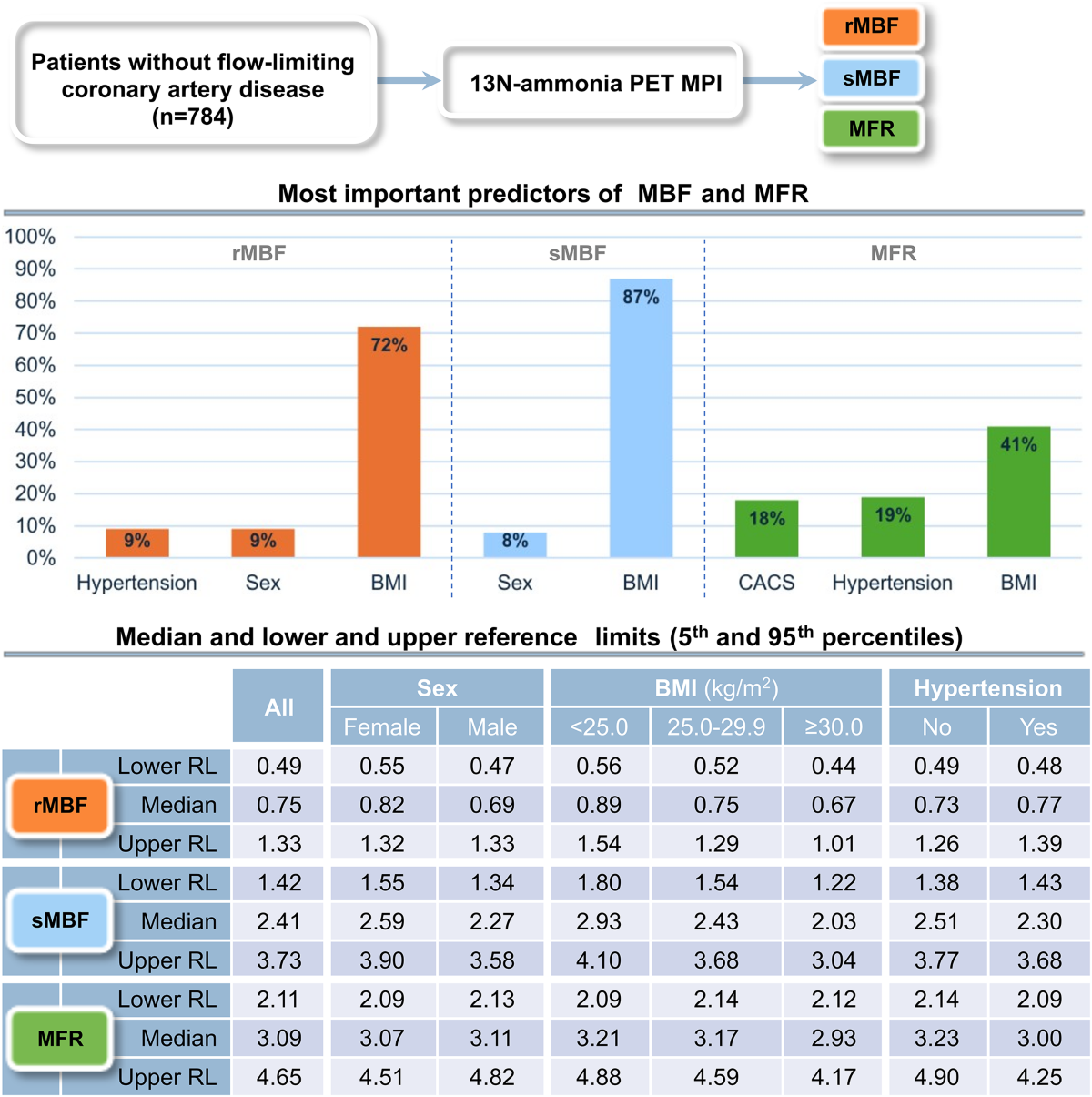
- Demonstrated that median and reference limits for sMBF and rMBF decrease with increasing BMI, while MFR exhibits stable lower reference limits across a wide range of BMI.
Methodology
- Retrospective single-center study of patients who underwent 13N-ammonia PET-MPI.
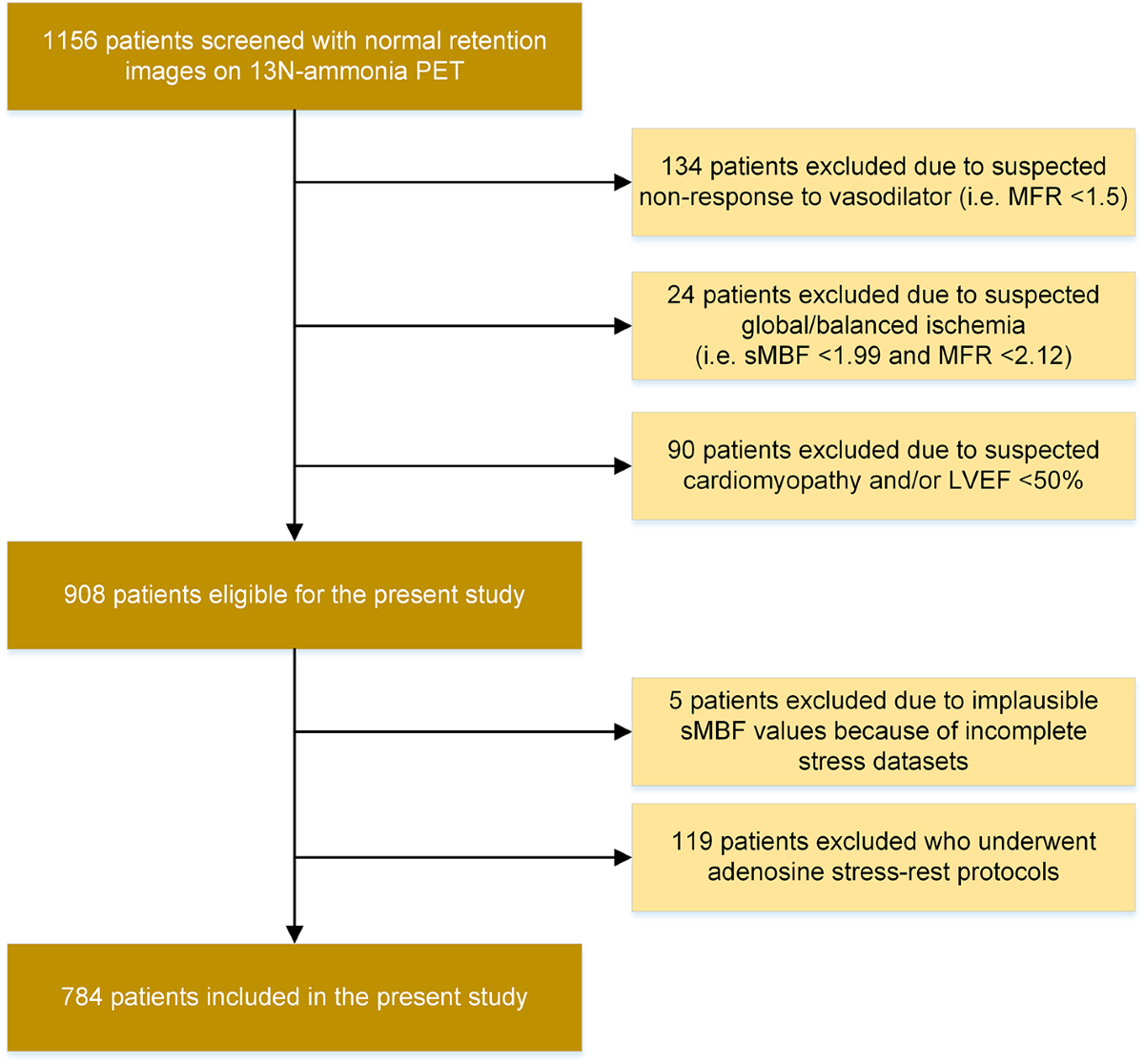
- Excluded patients with evidence of myocardial ischemia or scar, known cardiomyopathy, impaired left ventricular function, non-response to vasodilators, and those who underwent a stress-rest protocol.
- Multiple linear regression analyses were performed to identify independent predictors of rMBF, sMBF, and MFR.
- Predictor importance was calculated.
- Median, lower reference limit (LRL), and upper reference limit (URL) for rMBF, sMBF, and MFR were calculated based on the presence of predictors.
Results
- 784 patients were included.
- Median rMBF was 0.75 mL∙min−1∙g−1 (LRL=0.49 mL∙min−1∙g−1; URL=1.33 mL∙min−1∙g−1).
- Median sMBF was 2.41 mL∙min−1∙g−1 (LRL=1.42 mL∙min−1∙g−1; URL=3.73 mL∙min−1∙g−1).
- Median MFR was 3.09 (LRL=2.11; URL=4.65).
- BMI was the single most important independent predictor of rMBF, sMBF, and MFR (predictor importance of 72%, 87%, and 41%, respectively; standardized β=-0.434, -0.566 and −0.174, respectively).
- Additional predictors were sex and hypertension for rMBF, sex for sMBF, and hypertension and coronary artery calcium score (CACS) for MFR.
Discussions
- The study is limited by its observational, single-center design, and potential residual confounding cannot be excluded.
- The lack of outcome data is a major limitation, and future studies are needed to evaluate the prognostic value of the established reference limits.
- The retrospective nature of the study resulted in a lack of conclusive data on renal function, preventing evaluation of its potential effect on MBF.
- The results are limited to PET MPI with 13N-ammonia, and the impact of different scanners or software solutions was not assessed.
Comments
Join the discussionNo comments yet. Be the first to comment.