Objectives
- This case report highlights the unexpected uptake of 68Ga-Trivehexin in non-malignant fibrotic lung tissue in a patient with recurrent lung adenocarcinoma.
- It suggests that integrin-targeted PET imaging with 68Ga-Trivehexin may have potential in the assessment of fibrotic diseases, such as radiation-induced pulmonary fibrosis.
Methodology
- The study utilized [18F]FDG PET/CT and 68Ga-Trivehexin PET/CT for imaging.
- 68Ga-Trivehexin is described as having high specificity for epithelial malignancies due to its targeting of the αvβ6 integrin receptor.
- Bronchoalveolar lavage was used to rule out infection and malignancy.
Results
- The case involves a 55-year-old male with recurrent right lung adenocarcinoma.
- Initial diagnosis was left upper lobe adenocarcinoma (cT2acN0cM0, stage IB).
- Follow-up CT showed near-total reduction of the left lung tumor and mild post-radiation changes after chemoradiotherapy.
- Both [18F]FDG PET/CT and 68Ga-Trivehexin PET/CT showed uptake in the recurrent lesion (blue arrows).
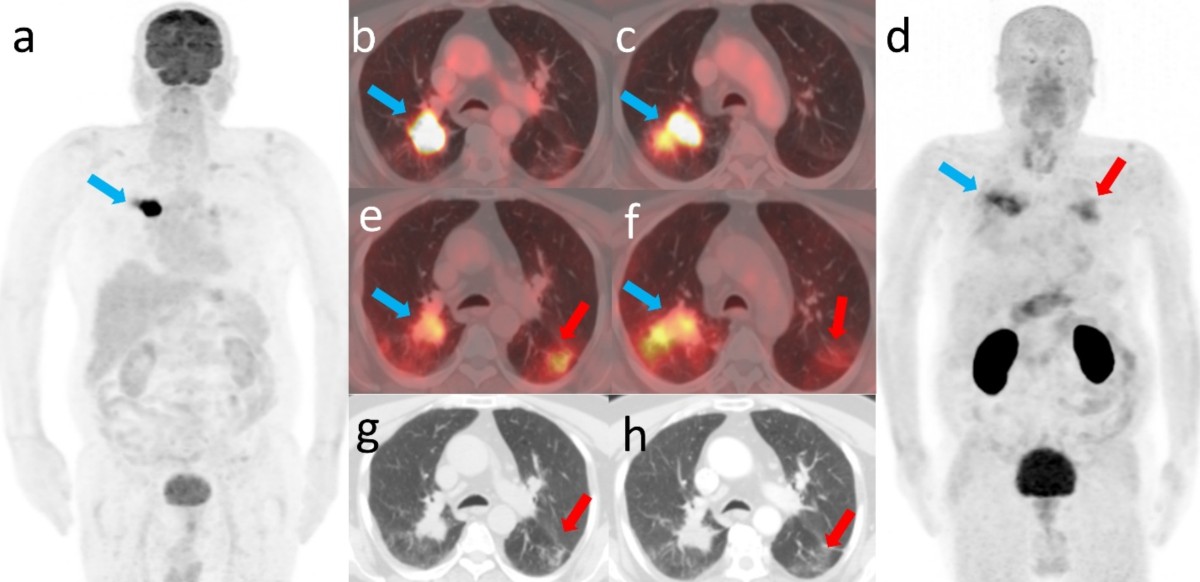
- Fibrotic infiltrates (red arrows) in the left lung showed no [18F]FDG uptake but did show 68Ga-Trivehexin uptake.
Discussions
- This is a single case report, which limits the generalizability of the findings. Further studies with larger patient cohorts are needed to confirm these observations.
- The report lacks quantitative data regarding the intensity of 68Ga-Trivehexin uptake in the fibrotic tissue compared to the malignant lesion. Providing standardized uptake values (SUV) would strengthen the report.
- The mechanism of 68Ga-Trivehexin uptake in fibrotic tissue is discussed based on existing literature, but further investigation into the specific molecular pathways involved in this case would be beneficial.
Reference: 68Ga Trivehexin PET CT uptake in malignant and fibrotic lung tissue refining diagnostic applications
Comments
Join the discussionNo comments yet. Be the first to comment.