Objectives
- Compared the efficacy and safety of 64Cu-labeled PSMA-3Q using NOTA (1,4,7-triazacyclononane-1,4,7-triacetic acid) and DOTA (1,4,7,10-tetraazacyclododecane-1,4,7,10-tetraacetic acid) as bifunctional chelating agents (BFCAs) in prostate cancer.
- Evaluated the stability, bioavailability, and therapeutic potential of 64Cu-DOTA-PSMA-3Q and 64Cu-NOTA-PSMA-3Q in preclinical models and initial clinical trials.
Methodology
- 64Cu-DOTA-PSMA-3Q and 64Cu-NOTA-PSMA-3Q were synthesized by manual labeling.
- Radiochemical purity, stability, specificity, and biodistribution were evaluated in preclinical studies.
- PET/CT imaging was used in 23 patients with suspected prostate cancer to evaluate the biodistribution of the tracers.
- Statistical analyses included independent sample t-tests, tests for homogeneity of variance, and the Wilcoxon rank sum test.
Results
- Radiochemical purities of both tracers were >98%.
- Biodistribution in mice: 64Cu-DOTA-PSMA-3Q had significantly higher liver uptake than 64Cu-NOTA-PSMA-3Q at 1h (2.92±0.44% ID/g vs. 0.83±0.06% ID/g, P=0.027).
- Micro-PET/CT in mice: 64Cu-DOTA-PSMA-3Q had better tumor retention at 24h (10.05±0.46% ID/g vs 5.38±1.06%ID/g, P=0.002).
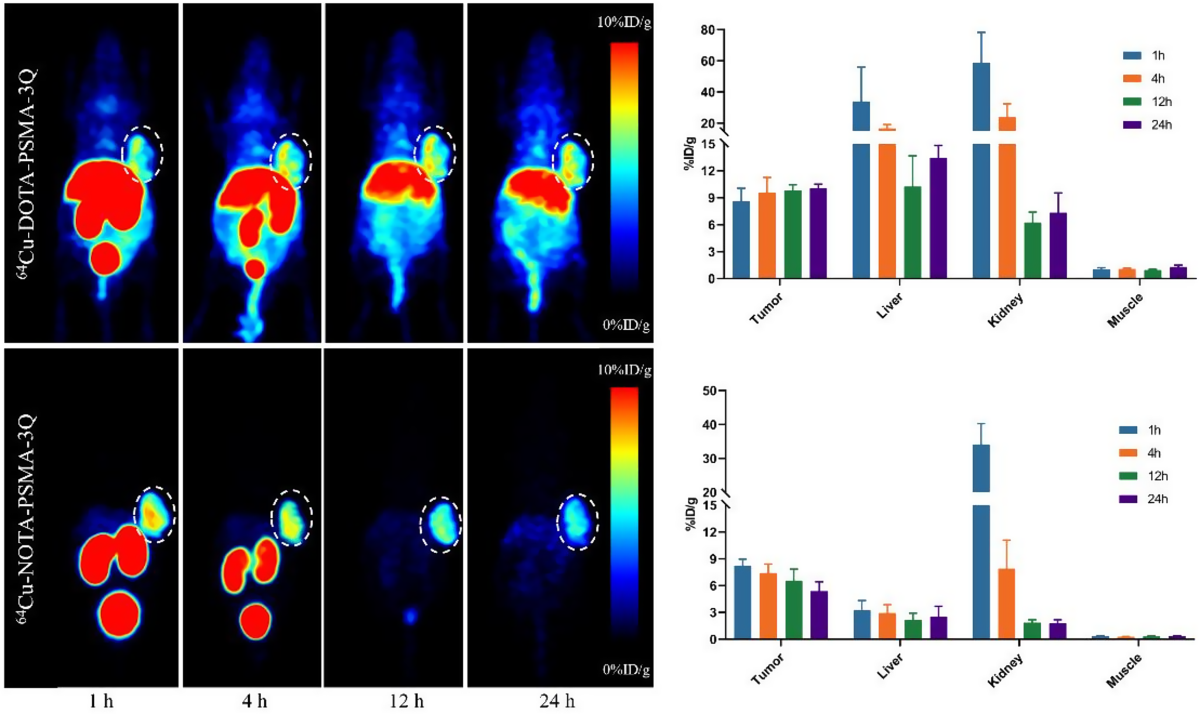
- Clinical PET/CT: Liver uptake of 64Cu-NOTA-PSMA-3Q was significantly lower than 64Cu-DOTA-PSMA-3Q (4.04 vs. 8.18).
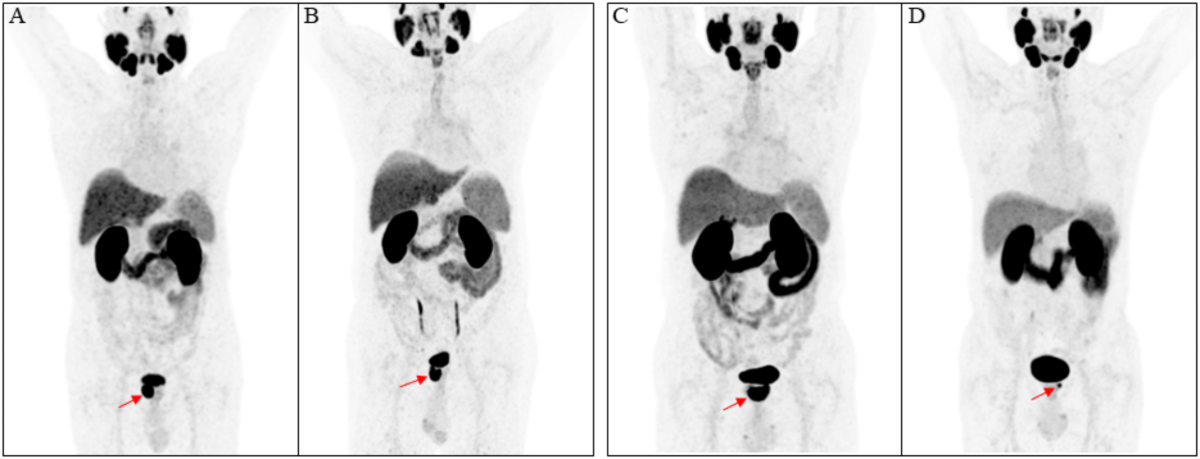
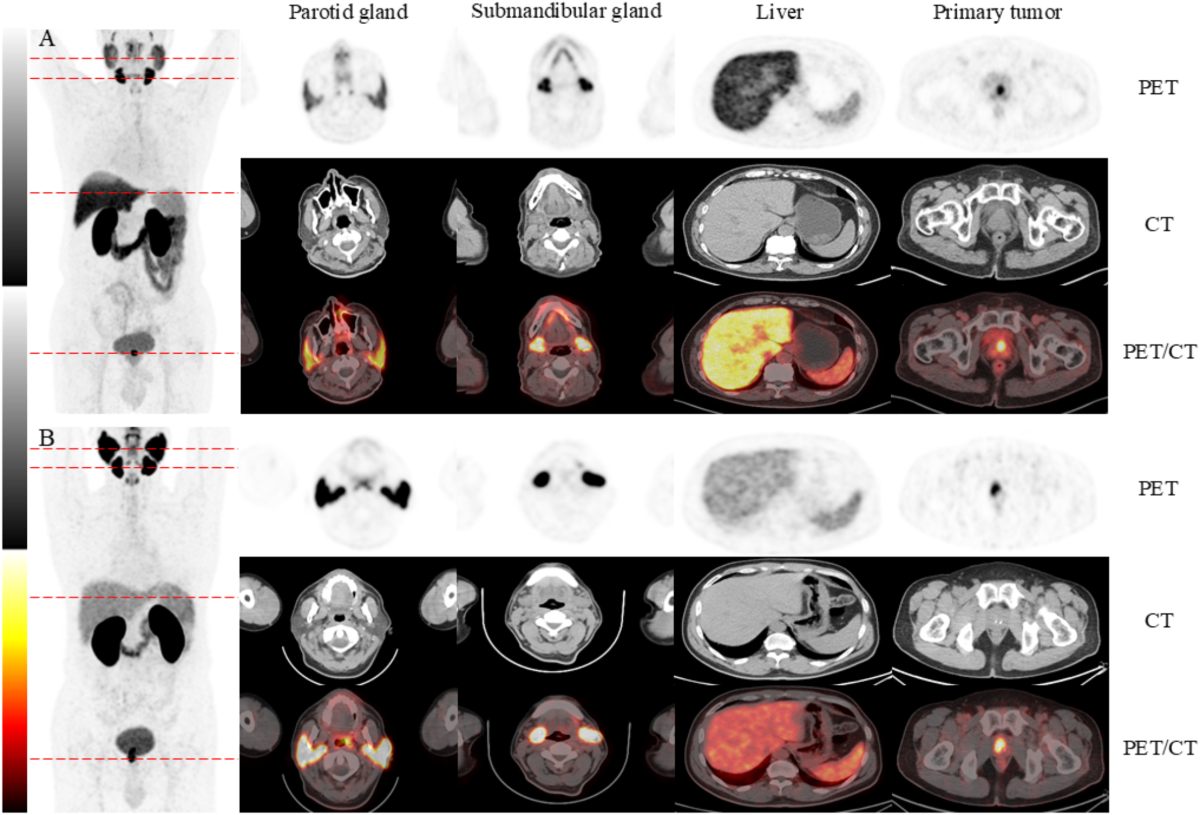
- Clinical PET/CT: 64Cu-NOTA-PSMA-3Q had higher uptake in lacrimal glands (17.73 vs. 10.84), parotid glands (20.98 vs. 16.30), and submandibular glands (20.26 vs. 17.28).
Discussions
- The study is limited by its small sample size (n=23), which may affect the generalizability of the findings. A larger study is needed to confirm these results.
- The lack of biodistribution data from healthy volunteers is a limitation. Including healthy controls would provide a baseline for comparison.
- While the study compares DOTA and NOTA, it doesn't explore other potential chelators or modifications to the PSMA-3Q ligand that might further improve imaging characteristics.
- The study focuses primarily on biodistribution and imaging. Further investigation into the potential therapeutic applications, especially considering the theranostic potential of 64Cu, would strengthen the study.
Comments
Join the discussionNo comments yet. Be the first to comment.