Objectives
- This study evaluated the impact of extended [177Lu] Lu-PSMA-617 therapy on kidney function in patients with metastatic castration-resistant prostate cancer (mCRPC).
- It assessed the cumulative renal absorbed dose (cRD) and its influence on creatinine clearance levels, measured by CKD-EPI, in patients undergoing four or more cycles of therapy.
- The study found that a personalized dosimetric approach may allow for extended cycles of [177Lu] Lu-PSMA-617 therapy with manageable nephrotoxicity.
Methodology
- The study retrospectively analyzed 110 mCRPC patients who received ≥4 cycles of [177Lu] Lu-PSMA-617 therapy.
- Whole-body static and abdominal SPECT-CT imaging was performed at 4, 24, and 96 hours post-administration to calculate the cRD.
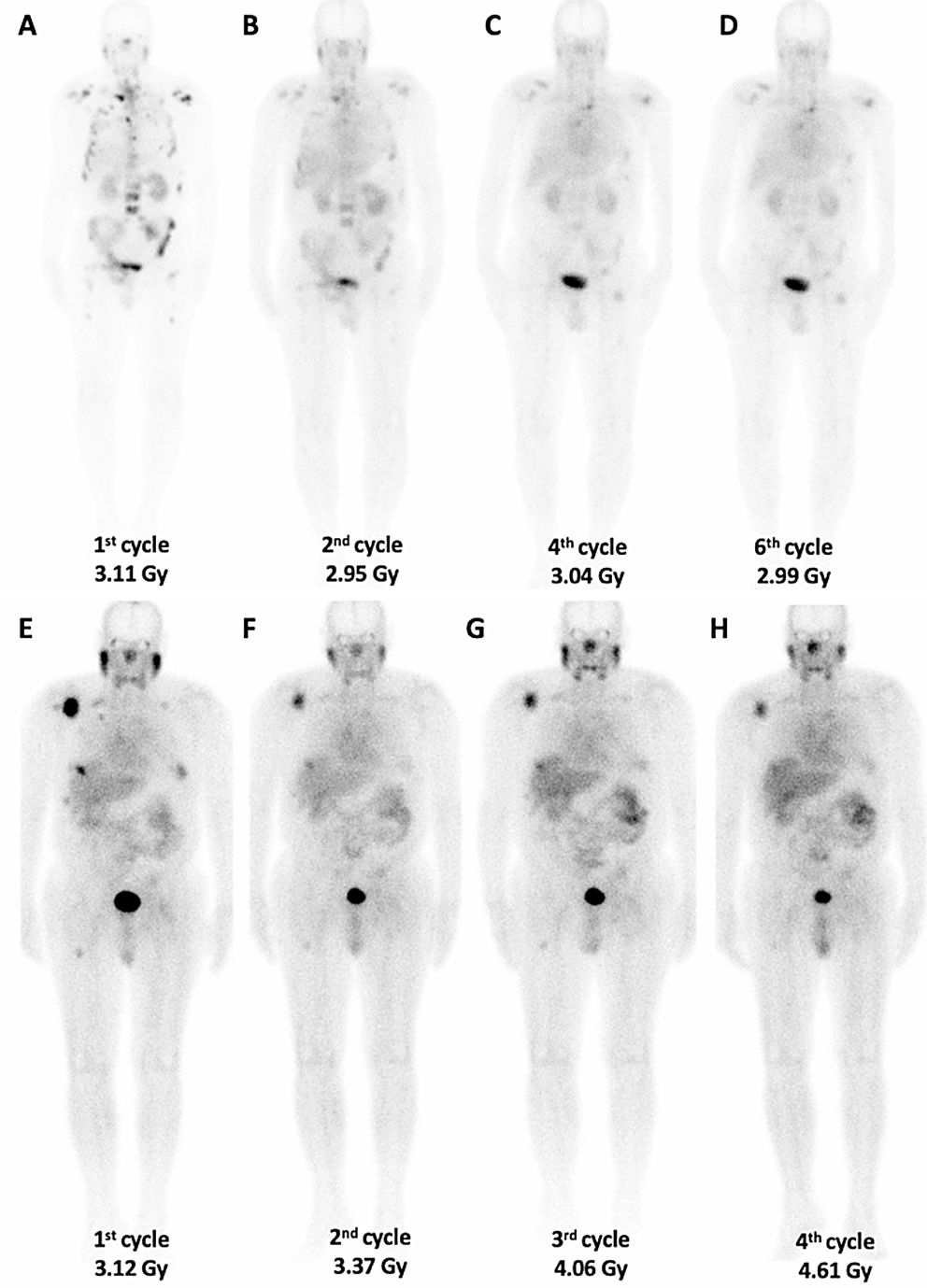
- Kidney function was assessed using dynamic renal scintigraphy and biochemical tests (CKD-EPI formula) before each treatment cycle and at 6 weeks post-treatment.
- Statistical analysis (repeated measures ANOVA, Pearson correlation) was used to examine changes in CKD-EPI values across absorbed doses and their correlation.
Results
- The mean cRD after 4, 6, and 8 cycles were 13.13±3.63, 19.3±5.11, and 27.1±6.8 Gy, respectively.
- No significant correlation was found between cRD and CKD-EPI values (p>0.05).
- No significant difference in CKD-EPI levels was observed before treatment and after the 4th, 5th, 6th, 7th, and 8th cycles (p>0.05).
- A statistically significant difference in CKD-EPI was observed between pre- and post-treatment values in patients reaching a cRD of 23 Gy (p<0.05), with a 36.2% decrease.
- Of 13 patients exceeding a cRD of 28 Gy, five maintained CKD-EPI levels above 90 mL/min/1.73 m2 post-treatment.
Discussions
- The study's retrospective design and single-center nature limit the generalizability of the findings.
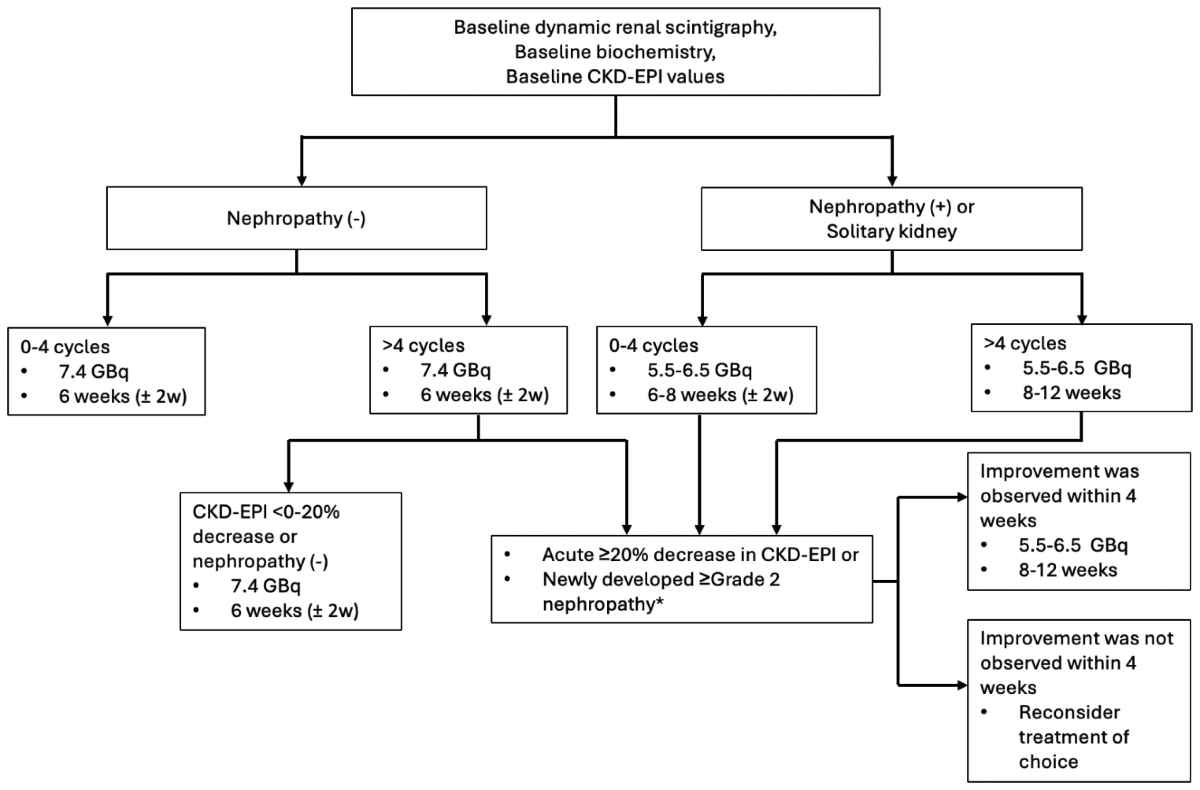
- The relatively small sample size, especially for patients exceeding 40 Gy cRD, restricts statistical power and the ability to draw definitive conclusions about higher dose ranges.
- The short follow-up period hinders the assessment of long-term renal effects. A longer follow-up would be beneficial.
- While the study uses CKD-EPI, exploring other markers of renal function (e.g., cystatin C) could provide a more comprehensive assessment.
- The study could benefit from a more detailed analysis of the impact of prior therapies (chemotherapy, radiotherapy) on renal function, beyond just noting their presence or absence.
Comments
Join the discussionNo comments yet. Be the first to comment.